

Water quality in Tampa, Florida is not a simple “good water” or “bad water” conversation. It depends on where the property is located, where the water comes from, how the plumbing is built, what the water is used for, and whether the property is connected to city water or private well water.
A homeowner in Tampa may be dealing with hard water stains, dry-feeling skin, scale buildup, or a chlorine taste from municipal water. A property owner outside the city may be dealing with well water that smells like sulfur, leaves orange iron stains, or carries sediment into the plumbing. A restaurant may need better water for coffee, ice, dishwashing, and kitchen equipment. A hotel may need water treatment to protect water heaters, laundry systems, fixtures, and guest experience. A nursery, car wash, warehouse, medical office, or commercial kitchen may need an entirely different water treatment strategy.
That is what makes Tampa water quality such an important topic. The region does not rely on only one water source. Tampa Bay Water describes the regional supply as a blend of groundwater, river water, and desalinated seawater, serving more than 2.6 million residents and businesses across the region. Because the supply is blended, and because private wells are still used throughout many surrounding areas, the water problems people experience can vary from one property to another.
The best water treatment system is not the biggest system, the most expensive system, or the one with the flashiest brochure. The best system is the one that matches the actual water problem.
Cleaner water starts with understanding the water first. Guessing at the solution usually creates more problems than it solves.
This guide explains the most common water quality issues in Tampa and surrounding regions, including hard water, iron, sulfur, sediment, chlorine taste, bacteria concerns, commercial water needs, and newer concerns related to saltwater intrusion. It also breaks down common treatment options such as water softeners, water conditioners, Katalox-Light iron filters, carbon sulfur filters, sediment removal systems, chemical injection, UV sanitation, and reverse osmosis.

Why Tampa Water Quality Can Vary So Much
Tampa water quality can change based on the source of the water, the season, the location, and the plumbing system. In many areas, water comes from a managed public supply. In other areas, properties may rely on private wells. Some commercial properties may use city water for certain parts of the building and well or irrigation water for other uses. That alone can create a wide range of water quality conditions.
Tampa Bay’s regional water supply is especially unique because it uses a combination of groundwater, surface water, and desalinated seawater. Tampa Bay Water reported that in fiscal year 2025, the regional supply included approximately 54.7 percent groundwater, 40.9 percent surface water, and 4.4 percent desalinated seawater. That kind of blended supply helps support regional demand, but it also reminds us that water quality is connected to weather patterns, drought conditions, river flows, aquifer conditions, treatment systems, and long-term water planning.
The average homeowner does not need to become a water chemist. That would be cruel and unusual punishment. But it does help to understand that water problems usually come from specific causes. Hard water is different from iron. Iron is different from sulfur. Sulfur is different from bacteria. Sediment is different from chlorine taste. Saltwater intrusion is different from normal mineral content.
That is why a proper water treatment recommendation should begin with water testing, site conditions, and a clear conversation about what the customer is noticing.
Common Tampa-area water complaints include hard water scale, orange or brown staining, rotten egg odor, cloudy water, sediment, chemical taste, dry skin or hair after showering, clogged fixtures, poor ice quality, and appliance buildup. Commercial properties may also notice equipment scale, inconsistent product quality, odor complaints, staining, maintenance issues, or customer experience problems.
These are not all solved by the same filter. A water softener can help with hardness, but it does not disinfect water. A carbon filter can help with taste and odor, but it does not remove hardness. UV sanitation can help with microorganisms, but it does not remove sediment, iron, sulfur, or salt. A sediment filter can catch particles, but it does not correct mineral chemistry.
Water treatment works best when the system is built like a plan, not a pile of parts.

City Water and Well Water Are Two Different Conversations
The first major question for any Tampa-area property is simple: is the property using city water, private well water, or both?
City water and well water can both benefit from treatment, but they usually have different problems and different priorities.
City Water in Tampa
City water is treated and regulated before it reaches homes and businesses. That is a major benefit. Municipal water treatment is designed to meet public water standards and provide safe drinking water to large populations. However, treated city water can still have qualities that customers want to improve after it enters their property.
A home connected to city water may still experience chlorine taste, chemical smell, hardness, scale buildup, water spots, sediment from older plumbing, or dry-feeling water. These issues are often not about emergency safety. They are usually about comfort, taste, equipment protection, and overall water quality.
For example, a homeowner may dislike the taste of tap water or the smell of chlorine in the shower. A family may notice white buildup around faucets and showerheads. A restaurant may notice that coffee tastes better with filtered water. A hotel may want to reduce scale in water heaters and laundry equipment. A salon may want water that feels better when rinsing hair.
In these cases, treatment is used to improve the water after the meter. Common city water solutions include whole-house carbon filtration, water softeners, water conditioners, sediment pre-filters, point-of-use drinking water filters, and reverse osmosis systems. Commercial properties may require larger systems with higher flow rates, better pre-filtration, and more specific equipment protection.
Private Well Water Around Tampa
Private well water is a different situation. A private well is not managed the same way as a municipal system. The property owner is responsible for testing and maintaining the water. The Florida Department of Health strongly recommends that private well owners test their water for bacteria and nitrate at least once per year.
Private wells can produce great water, but they can also contain naturally occurring minerals, sediment, iron, manganese, sulfur, bacteria, nitrate, tannins, or other concerns depending on the well depth, aquifer conditions, plumbing, pump system, surrounding land use, and maintenance history.
Well water problems are often more visible and more noticeable than city water issues. Iron may leave orange stains in toilets, sinks, laundry, sidewalks, and irrigation zones. Sulfur may create a rotten egg odor. Sediment may clog fixtures or fill toilet tanks with grit. Hardness may create scale. Bacteria concerns may require testing and sanitation. Coastal or brackish conditions may raise concerns about chloride, total dissolved solids, or saltwater intrusion.
A proper well water system often requires multiple stages. That might include sediment removal, oxidation, chemical injection, a retention tank, an iron filter, a sulfur filter, a softener, a conditioner, UV sanitation, or reverse osmosis for drinking water. The order matters. The sizing matters. The test results matter.
Throwing a small filter at a serious well problem is like putting a screen door on a submarine. Technically, something was installed. Practically, the mission has failed.
Common Water Quality Problems in Tampa and Surrounding Areas
Water problems are easier to understand when they are grouped by what people actually see, smell, taste, or experience. Most customers do not start by saying, “I believe my oxidation-reduction pathway is inadequate.” They say, “My water smells bad,” or “My toilet is turning orange,” or “Why does my shower door look like a fossil?”
That is the right place to start.

Hard Water and Scale Buildup
Hard water is caused mainly by dissolved minerals, especially calcium and magnesium. When hard water is heated or evaporates, those minerals can leave scale behind. That scale can build up on fixtures, glass, appliances, pipes, and water-using equipment.
In homes, hard water may show up as white crust around faucets, spots on dishes, cloudy glassware, stiff laundry, soap that does not lather well, dry-feeling skin, or buildup on shower doors. In businesses, hard water can create higher maintenance costs and reduce equipment performance.
Restaurants, coffee shops, laundromats, hotels, salons, car washes, apartment complexes, and commercial kitchens all have reasons to care about hardness. Scale can build up inside water heaters, dish machines, boilers, espresso machines, washing machines, ice machines, and other equipment. Even a small amount of scale can become a big operational headache over time.
Water softeners are the most common solution for true hard water because they remove hardness minerals through ion exchange. Water conditioners may also be used when the goal is to reduce scale behavior without using a traditional salt-based softener. The right choice depends on the water test, customer goals, equipment requirements, and maintenance preferences.
Iron Staining
Iron is one of the most obvious water problems because it leaves evidence behind. It can create orange, red, brown, or rusty stains in toilets, sinks, tubs, showers, laundry, driveways, walls, and irrigation zones.
The EPA lists iron as a secondary drinking water standard, meaning it is associated with aesthetic concerns such as rusty color, sediment, metallic taste, and reddish or orange staining. Secondary standards are not federal health-based limits, but they are useful for understanding nuisance water problems that affect taste, appearance, odor, and usability.
Iron is especially common in well water, but staining can also come from plumbing corrosion or older pipes. In irrigation systems, iron can stain buildings, sidewalks, fences, landscaping borders, and concrete. For commercial properties, visible iron staining can make an otherwise clean business look neglected.
Iron treatment depends on the type and amount of iron in the water. Some low-level iron issues may be manageable with certain softeners, but heavier iron usually requires dedicated iron removal. Media filters, oxidation, chemical injection, and Katalox-Light systems are commonly used depending on the water chemistry.
Sulfur and Rotten Egg Odor
Sulfur odor is usually described as a rotten egg smell. It is one of the fastest ways to make a customer dislike their water. No one wants to turn on the shower and feel like the plumbing has joined a villain origin story.
Sulfur odor may come from hydrogen sulfide gas, sulfur bacteria, organic material, or reactions inside a water heater. Sometimes the odor is present in both hot and cold water. Sometimes it is only noticeable in hot water. That difference matters because it can help narrow down the cause.
Sulfur problems are common in well water applications, but city water customers can also experience odor issues in certain situations. For homeowners, sulfur odor is unpleasant and frustrating. For businesses, it can affect customer trust. A restaurant, hotel, salon, gym, daycare, or medical office cannot afford water that smells bad.
Sulfur treatment may involve carbon filtration, catalytic carbon, peroxide injection, chlorination, ozonation, aeration, retention tanks, or a sulfur filter designed for the specific water conditions. Mild odor may be handled with high-grade carbon media. Stronger odor may require oxidation before filtration.
Sediment, Sand, and Turbidity
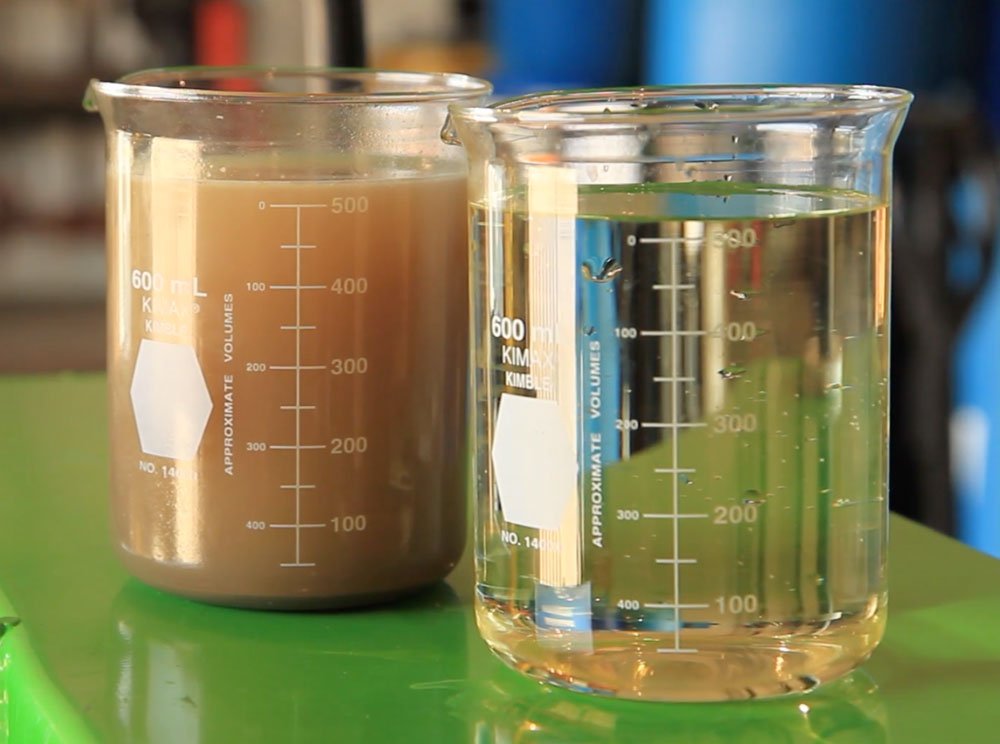
Sediment includes particles such as sand, grit, dirt, rust, clay, or other suspended solids. Turbidity refers to cloudy water caused by particles that remain suspended in the water.
Sediment may show up as grit in sinks, cloudy water, sand in toilet tanks, clogged faucet aerators, dirty-looking ice, reduced water pressure, or frequent cartridge filter changes. It can come from private wells, older plumbing, construction disturbance, water main work, corroded pipes, or naturally occurring material in the water source.
Sediment is important because it can damage equipment and interfere with other treatment systems. For example, UV sanitation systems need clear water to work properly. If sediment or turbidity blocks the UV light, disinfection can be less effective.
Sediment treatment may include spin-down filters, cartridge filters, backwashing sediment filters, multi-media filters, or turbidity removal systems. In many water treatment designs, sediment removal is the first stage because it protects everything installed after it.
Chlorine Taste, Chemical Smell, and City Water Comfort
Municipal water systems use treatment processes to protect public health. Disinfectants are part of that process. However, many people dislike the taste or smell that can remain in treated city water.
Customers may describe city water as tasting like a pool, smelling chemical, drying out their skin, making coffee taste flat, or creating poor ice quality. For these complaints, carbon filtration is often a strong solution.
Whole-house carbon systems can improve water throughout the home, while point-of-use systems can improve water at a specific sink, refrigerator, coffee station, or ice maker. Commercial carbon filtration is especially useful for restaurants, cafes, hotels, offices, gyms, and food-service businesses where taste and smell directly affect the customer experience.
Bacteria and Microbiological Concerns
Bacteria concerns are especially important for private wells. A well may become contaminated after flooding, repairs, nearby septic issues, poor well sealing, agricultural runoff, or environmental changes. Clear water can still fail a bacteria test, so appearance alone is not enough.
Sanitation systems may include UV, chlorination, ozonation, or other disinfection methods. UV systems are popular in residential well applications because they disinfect water without adding chemicals. However, UV systems do not remove sediment, hardness, iron, sulfur, chlorine, or salt. They need properly pre-filtered water to work effectively.
For commercial properties, bacteria concerns can become more serious because public use, food service, healthcare, assisted living, daycare, and multi-unit properties may have additional responsibilities. Florida DOH notes that some wells serving businesses, commercial establishments, multiple rental units, day care facilities, group homes, nursing homes, or assisted living facilities may fall under public water system considerations rather than ordinary private well use.
Saltwater Intrusion and Why Tampa Should Pay Attention
Saltwater intrusion is a growing concern across many coastal regions, including parts of Florida. It happens when saltwater moves into freshwater aquifers or freshwater zones. This can be influenced by groundwater withdrawals, drought, sea-level change, coastal geology, changes in groundwater pressure, and the natural movement of freshwater and saltwater underground.
The Tampa Bay region has a long history of managing groundwater carefully because aquifer health matters for both public supply and environmental protection. The U.S. Geological Survey published a 2024 scientific investigation focused on the interconnection between Tampa Bay and the Floridan aquifer system. The report studied historical groundwater data from 1976 through 2022 and identified chloride concentration as a key water-quality parameter related to movement of the freshwater and saltwater interface.
For a homeowner or business owner, the practical concern is simple. If saltier water begins affecting a well or local groundwater source, a normal softener or carbon filter will not solve the problem.
Saltwater intrusion may affect water through increased chloride, higher total dissolved solids, salty taste, corrosion, irrigation problems, plant stress, or equipment wear. It may be especially relevant for coastal wells, agricultural properties, irrigation-heavy sites, nurseries, car washes, commercial buildings, and industrial users.
This does not mean every Tampa property is facing saltwater intrusion. It means the topic belongs in the conversation, especially when a property has a private well, is located near coastal influence, has high TDS, shows signs of corrosion, or produces water that tastes salty.
Treatment depends on severity and use. Reverse osmosis may help with drinking water or commercial process water. Some commercial applications may need larger RO systems or specialized designs. Irrigation water may require a separate evaluation. In severe cases, the solution may involve source management, well evaluation, or professional water resource guidance.
Tampa Bay regional water planning has also included aquifer recharge strategies. Hillsborough County describes aquifer recharge projects where recharge water creates a fresh water barrier that helps prevent saltwater intrusion into freshwater portions of the aquifer and improves water levels inland.
The key takeaway is this: salt-related water problems require testing before treatment. A softener treats hardness. Carbon improves taste and odor. Neither one removes dissolved salts in the way reverse osmosis or specialized treatment can.

Residential Water Treatment Solutions for Tampa Homes
Residential water treatment should make life easier. It should improve water comfort, protect appliances, reduce stains, improve taste, and help homeowners feel better about the water they use every day.
For city water homes, the most common goals are reducing hardness, improving taste, reducing chlorine smell, protecting appliances, and improving shower comfort. For well water homes, the goals may include removing iron, controlling sulfur odor, reducing sediment, treating bacteria concerns, correcting hardness, or improving drinking water.
A well-designed residential system may include one piece of equipment or several stages working together.
Water Softeners
A water softener is commonly used when hardness is the main concern. Traditional softeners use ion exchange to remove calcium and magnesium from the water. This can reduce scale buildup, improve soap performance, protect water heaters, improve dishwasher results, reduce spotting, and help plumbing fixtures stay cleaner.
Softeners are useful for both city water and well water, but they are not designed to solve every problem. Heavy iron, sulfur odor, bacteria, sediment, chlorine taste, or high salinity may require separate treatment. In many homes, a softener works best as part of a larger system that may also include sediment filtration, carbon filtration, or UV sanitation.
Water Conditioners
Water conditioners are often used when customers want scale control but prefer an alternative to traditional salt-based softening. Some conditioners use dual-layered or multi-layered media systems that may combine scale control, filtration, or other water improvement benefits depending on the design.
A conditioner may be a good fit for city water homes with moderate scale concerns or homeowners who want lower-maintenance options. However, a conditioner should not be described as identical to a softener unless it truly removes hardness through ion exchange. The distinction matters because customers deserve honest explanations.
Whole-House Filtration
Whole-house filtration treats water as it enters the home. These systems are commonly used to improve taste, odor, chlorine smell, sediment, and general water quality throughout the house.
Carbon filtration is common for city water because it can reduce chlorine taste and odor. Sediment filtration is common as a protective first stage. On well water, filtration may need to be more specific, especially when iron, sulfur, turbidity, or bacteria are present.
Well Water Treatment
Well water treatment should be designed around test results. A complete well system may include sediment filtration, oxidation, chemical injection, a retention tank, an iron filter, a sulfur filter, softening, conditioning, UV sanitation, or drinking water reverse osmosis.
A common well water treatment path might look like this:
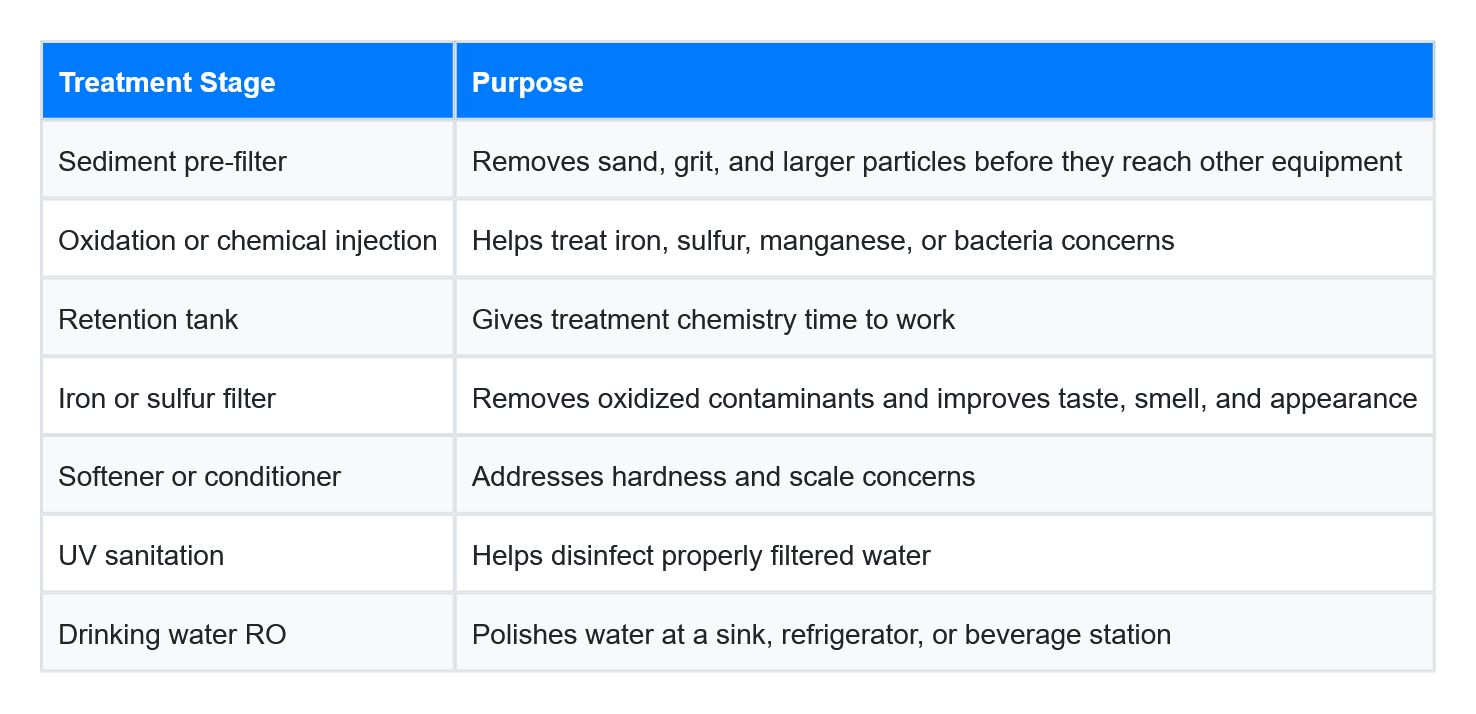
Not every well needs all of these stages. Some need only a few. Others need a more complete setup. The water test decides the path.

Commercial Water Treatment in Tampa
Commercial water treatment has a different level of importance because businesses often depend on water to operate. Poor water quality can affect products, equipment, sanitation, maintenance costs, and customer experience.
A home may tolerate some water spots. A restaurant, hotel, laundromat, car wash, coffee shop, salon, or medical office may not have that luxury.
Commercial systems must be sized for flow rate, gallons per day, peak demand, operating hours, plumbing layout, and equipment requirements. A small residential-style system placed into a commercial environment may fail quickly if it cannot handle the demand.
Restaurants and coffee shops may need water treatment for coffee, tea, fountain drinks, ice, dishwashing, steam equipment, and customer drinking water. Hotels and vacation rentals may need softening and filtration for guest comfort, laundry quality, water heater protection, and fixture maintenance. Laundromats may need soft water to improve wash performance and protect machines. Salons and med spas may need better water for hair, skin, towels, and client experience. Car washes may need softening and reverse osmosis for spot-free rinse. Nurseries and agricultural properties may need sediment, iron, sulfur, salinity, and irrigation protection.
The following table gives a simple overview.
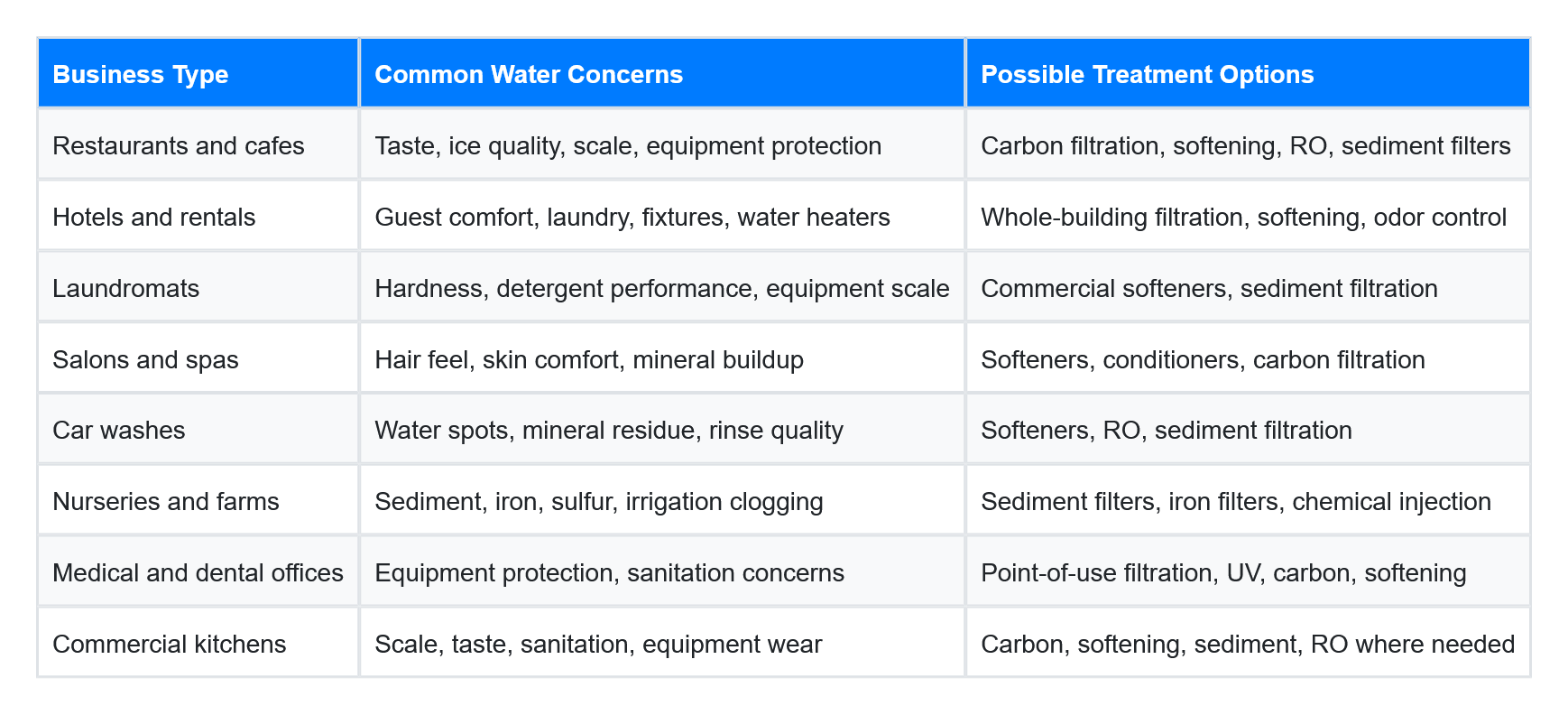
Commercial water treatment is not just about comfort. It can protect revenue. It can reduce maintenance calls. It can improve customer experience. It can help equipment last longer. In some businesses, better water can directly improve the product being sold.
Water Treatment Equipment Explained
Water treatment equipment is easiest to understand when each system is connected to the problem it is meant to solve.
Water Softeners
Water softeners are designed primarily for hardness. They remove calcium and magnesium and help reduce scale buildup. They are commonly used in homes, restaurants, hotels, laundromats, apartment complexes, salons, and other properties where hard water affects comfort or equipment.
A softener may help with spots, scale, soap performance, water heater life, laundry quality, and fixture buildup. It should not be used as the only solution for heavy iron, sulfur odor, sediment, bacteria, chlorine taste, or saltwater intrusion.
Water Conditioners
Water conditioners are often used to reduce scale behavior without traditional salt-based softening. Some systems use dual-layered or multi-layered media to address multiple water quality goals. They may be attractive for homeowners or businesses looking for reduced maintenance, salt-free operation, or scale control without removing hardness minerals in the same way as a softener.
Conditioners can be useful, but they should be recommended honestly. If the water is very hard or the business has equipment that requires softened water, a true softener may still be the better option.
Iron Filters With Katalox-Light Media
Katalox-Light is a specialty filtration media used in water treatment systems for iron, manganese, hydrogen sulfide, and suspended solids applications. Manufacturer and distributor materials describe Katalox-Light systems as being used for residential, commercial, industrial, and municipal filtration applications.
Katalox-Light iron filters can be a strong option when a basic cartridge filter is not enough. They are commonly used for well water where orange staining, metallic taste, sulfur odor, manganese, or suspended particles are present.
However, media filters need proper design. Flow rate, backwash capacity, pH, oxidation, water chemistry, and installation layout all affect performance. A filter that is undersized or poorly matched to the water may not solve the problem.
Sulfur Filters With High-Grade Carbon Media
Sulfur filters using high-grade carbon media can help reduce rotten egg odor and improve taste and smell. Carbon may be used by itself in mild cases or as a polishing stage after oxidation in stronger sulfur applications.
High-grade carbon systems are useful for homes, restaurants, hotels, salons, offices, and other properties where odor and taste matter. When sulfur odor is strong, treatment may also require peroxide injection, chlorination, ozonation, aeration, or retention time before the carbon filter.
Sediment and Turbidity Removal Systems
Sediment systems remove particles such as sand, dirt, rust, and suspended solids. Turbidity systems address cloudy water caused by fine particles.
These systems may include spin-down filters, cartridge filters, backwashing sediment filters, or multi-media filters. Sediment removal is commonly used as a first stage to protect softeners, carbon filters, iron filters, UV systems, appliances, valves, and commercial equipment.
Chemical Injection Systems
Chemical injection systems are used when water needs oxidation, disinfection, odor control, or specialized treatment.
Chlorination can be used for disinfection and oxidation. It may help with bacteria concerns, iron, manganese, and sulfur odor when designed properly. A retention tank is often used to provide contact time, and carbon filtration may be used afterward to remove chlorine taste and odor.
Ozonation uses ozone as a strong oxidizer. It can help with odor, iron, sulfur, and sanitation support in properly designed systems. It can be useful in both residential and commercial applications, but it requires correct equipment and contact time.
Peroxide injection is often used for sulfur odor and oxidation. It can be a good choice when customers want strong odor treatment without the same chlorine taste concerns. Peroxide is frequently paired with carbon filtration to produce cleaner, better-smelling water.
Chemical injection should never be treated casually. Dose rate, water chemistry, contact time, maintenance, and safety all matter.
UV and Sanitation Equipment
UV sanitation systems disinfect water using ultraviolet light. They are commonly used with private wells and may be installed after sediment, iron, sulfur, and turbidity have already been addressed.
UV is not a filter. It does not remove hardness, iron, sulfur, sediment, chlorine, or salt. It is a sanitation step. For UV to work well, the water must be clear enough for the light to reach microorganisms.
UV can be useful for homes, restaurants, agricultural properties, commercial buildings, daycares, wellness facilities, and well water systems where bacteria protection is needed.
Reverse Osmosis and Drinking Water Polishing
Reverse osmosis, often called RO, is used when customers want more polished drinking water or need to reduce total dissolved solids, certain dissolved contaminants, chloride, salinity, or taste concerns.
RO is commonly installed under a kitchen sink, at a refrigerator line, at a coffee station, for an ice maker, in a restaurant beverage system, or for commercial process water. It is also common in spot-free rinse applications for car washes and detailing.
Whole-house RO is possible in some cases, but it is more complex and usually requires professional design. For most homes, point-of-use RO is the practical choice.

How to Choose the Right Water Treatment System
Choosing the right system starts with asking the right questions.
What is the water source? Is it city water, private well water, irrigation water, or a combination? What symptoms are present? Is the issue taste, odor, staining, scale, sediment, bacteria, or salinity? Is the property residential or commercial? How many gallons per day are used? What is the peak flow rate? What equipment needs protection? What does the water test show?
A simple decision table can help organize the conversation.

The most important point is that water treatment should be matched to actual conditions. A system that works beautifully for one property may be wrong for another property down the road.
Better Water Starts With Better Understanding
Tampa water quality is a layered topic. The region uses a complex public water supply system, many surrounding properties rely on private wells, and water problems can vary widely by location, source, season, plumbing, and use. A homeowner may need help with hardness and taste. A business may need equipment protection and consistent water quality. A well owner may need iron, sulfur, sediment, and bacteria protection. A coastal or brackish water concern may require testing for chloride, TDS, and possible saltwater influence.
The good news is that most water problems can be understood and treated when the right testing and system design are used. Water softeners, conditioners, filtration systems, iron filters, sulfur filters, chemical injection, UV sanitation, and reverse osmosis all have a place. The key is knowing which tool belongs where.
Elevated Water Technologies helps Tampa-area homeowners and businesses identify water quality problems and choose treatment solutions that fit the property, the water source, and the customer’s needs. If your water is staining, smelling, scaling, clouding, or just acting suspiciously dramatic, Elevated Water Technologies can help point it in the right direction.
Sources and Further Reading
Tampa Bay Water, “Tampa Bay Regional Drinking Water Sources.”
Tampa Bay Water, “Current Drinking Water Sources.”
Tampa Bay Water, “2025 Tampa Bay Water Supply Overview.”
Florida Department of Health, “Private Well Water Testing.”
U.S. Environmental Protection Agency, “Secondary Drinking Water Standards: Guidance for Nuisance Chemicals.”
U.S. Geological Survey, “Assessment of the Interconnection Between Tampa Bay and the Floridan Aquifer System: Historical Groundwater Data Compilation and Analysis, 1976-2022.”
Hillsborough County, “Aquifer Recharge Projects.”
Tampa Bay Water, “Climate Variability and Water Supply Utilities.”